A table read lets you hear a script through other people's voices. Listen for confusion, awkward phrasing, uneven pace and moments of energy, then revise the page to serve the scene. Audience reactions are evidence to consider, not instructions you must follow.
Prepare the read
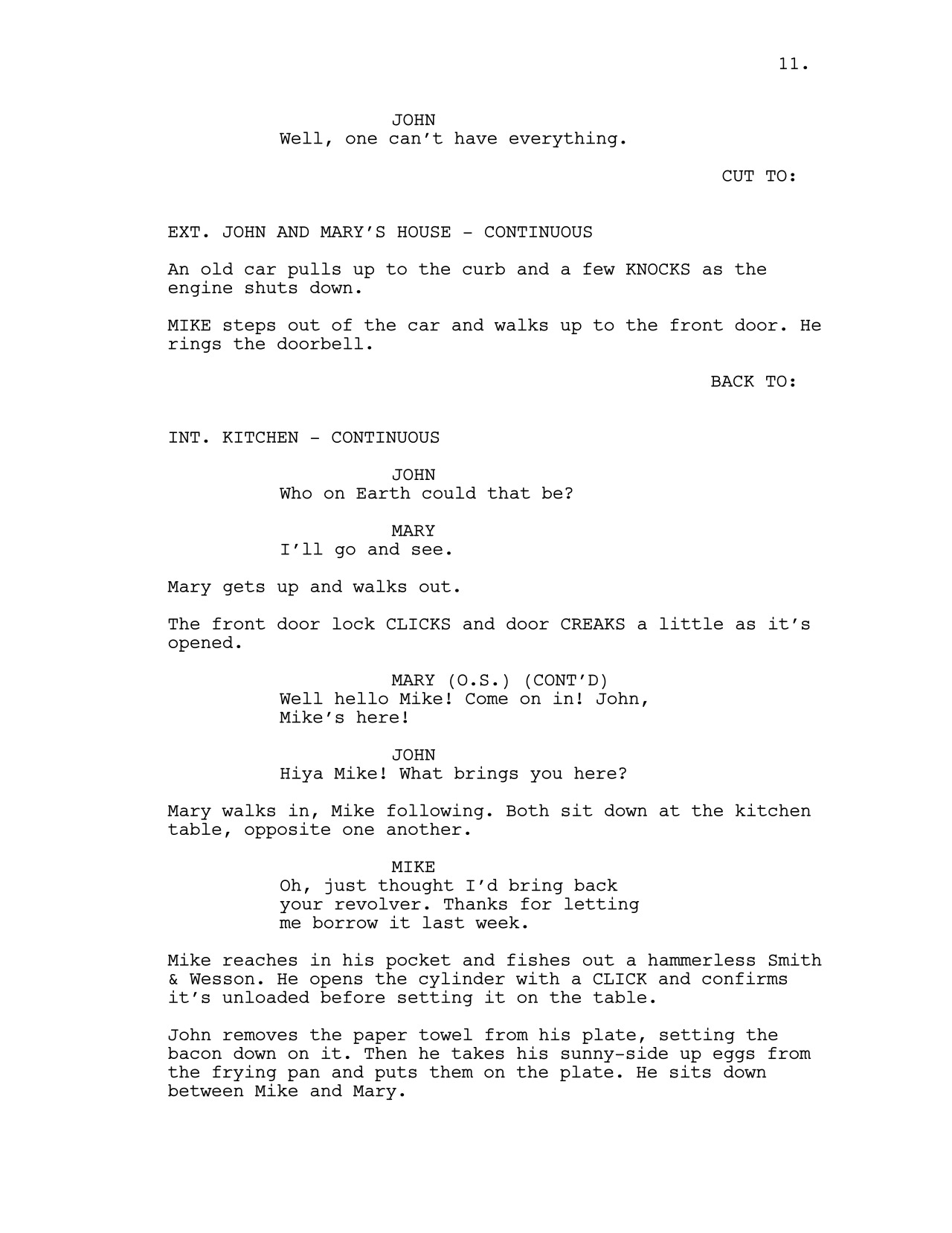
Share a version with clear character names and dialogue. Tell readers whether you want them to perform naturally or simply read the lines. Ask someone to keep time and note where questions arise. If the draft is early, explain that you are looking for story and clarity feedback, not a polished performance.
Listen before you explain
During the read, resist pausing to defend a line. Notice where a reader stumbles, where the room loses attention and where a choice creates a strong response. Mark the page and keep listening. A reaction can come from the writing, the performance, or the reader's interpretation; you can sort that out afterward.
Ask questions that reveal the scene
After the read, ask what readers thought each character wanted, where they felt uncertain and which moment changed the scene. Avoid leading questions such as “You liked the ending, right?” Give people space to describe their experience in their own words.
Revise the pattern, not every comment
Look for repeated confusion or a clear mismatch between your intention and what readers understood. Test a change to the scene order, action or dialogue. Keep lines that sound unlike the character, even if they are grammatically neat. For Kannada dialogue, consider register, relationship and code-switching as part of voice.
Compare versions
Save the read-through draft before revising. After edits, read the changed sections aloud again or ask one reader to check whether the problem is clearer. A table read is one stage in a longer process; it does not have to settle every decision.
For help with scene structure, read How to Write a Kannada Stage Play Script or the Kannada screenplay guide.